As healthcare systems face increasing demand, workforce challenges, and inequities in access, virtual care has emerged as a critical enabler for delivering more accessible, efficient, and equitable care.
This Working Group brings together global experts to advance virtual care models, share best practices, and drive practical, scalable solutions that can be adopted across different health systems.
Our focus is not only on discussion, but on translating knowledge into measurable impact


A national virtual care case study from Saudi Arabia
Prepared for the ISfTeH Virtual Care Working Group October 2026
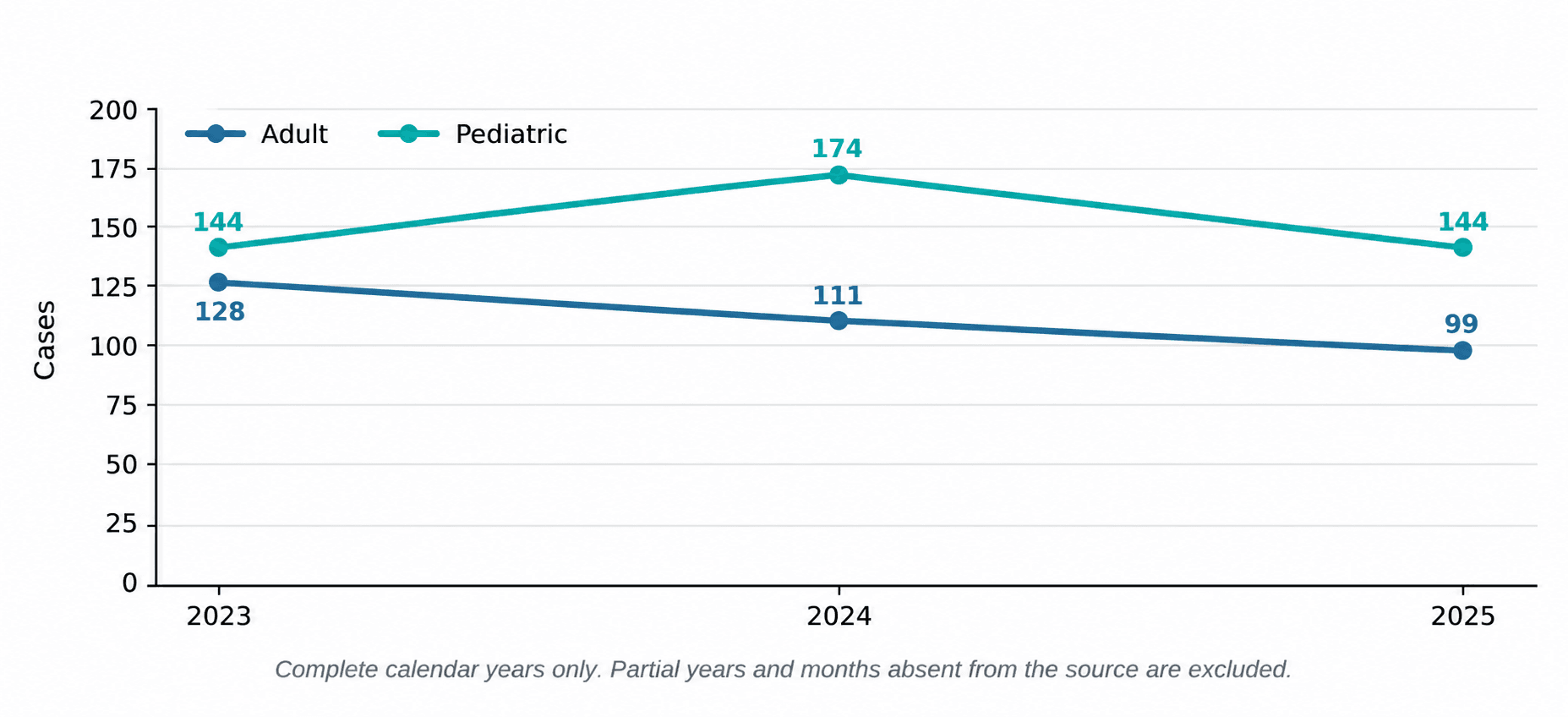
Seha Virtual Hospital established national virtual pathways for adult and pediatric cardiac case review. Adult operations began on 26 August 2021, followed by the pediatric service on 22 June 2022. The supplied dataset records 1,076 referrals, all reported as eligible and reviewed, across service-specific networks of 40 adult and 49 pediatric referring hospitals.
Of the reviewed cases, 1,051 (97.7%) were recorded as treated and 98.1% had a documented follow-up status. The program also reports that 64.2% of adult cases and 80.7% of pediatric cases were managed locally, alongside 409 adult and 477 pediatric transfers avoided.
The current dataset supports claims about reach, activity, recorded treatment status and follow-up capture. It does not yet support comparative claims about faster decisions, clinical recovery, cost savings or transfer reduction because baseline measures, outcome definitions and denominators were not supplied.
Complex cardiac cases can require expertise that is not available at every referring hospital. A national virtual review model can connect local teams with specialist input, standardize multidisciplinary discussion and help determine whether care can remain local or requires transfer.
The National Cardiac Committee created separate adult and pediatric virtual pathways. Referrals are assessed for eligibility, reviewed by relevant cardiac experts, documented with a recommendation, and followed to a recorded implementation status.
A hospital submits a cardiac case requiring specialist input.
The decision need and supporting information are defined.
Adult or pediatric experts review the case.
A treatment or transfer recommendation is documented.
Implementation status is recorded by the service.
| Milestone | Verified program data |
|---|---|
| Adult pathway launch | 26 August 2021 |
| Pediatric pathway launch | 22 June 2022 |
| Active referring hospitals | Adult 40; Pediatric 49 |
| Reported regional coverage | Adult 14; Pediatric 18 |
| Cumulative reviews | Adult 483; Pediatric 593 |
The two services together recorded 1,076 completed reviews: 483 adult and 593 pediatric cases. Hospital and regional figures remain service-specific because overlap between the adult and pediatric networks was not provided.
| Recorded status | Adult | Pediatric | Combined |
|---|---|---|---|
| Treated | 480 | 571 | 1,051 |
| In progress | 1 | 1 | 2 |
| Deceased | 0 | 3 | 3 |
| Undocumented | 2 | 18 | 20 |
| Documented follow-up | 99.6% | 97.0% | 98.1% |
The recommendation implementation rate reported in the workbook corresponds to Treated ÷ Reviewed: 99.37% for adults and 96.29% for pediatrics. This is best presented as a recorded process status until Seha confirms the clinical definition of “treated.”
A central promise of a national virtual committee is to bring expert decision support to the referring team while reserving physical transfer for cases that require it. The supplied data point to this intended effect, especially in the pediatric pathway.
| Measure | Adult | Pediatric |
|---|---|---|
| Managed locally | 64.24% | 80.71% |
| Reported transfers avoided | 409 | 477 |
| Completion within target | 100% | 100% |
The local-management percentages suggest that a substantial proportion of reviewed cases could continue care at their originating hospital. The transfer-avoidance counts are promising, but should remain labeled “reported” until Seha confirms the eligible population, denominator and reconciliation with local-management counts. Likewise, “100% within target” requires the official response-time target before it can be translated into a speed claim.
Distinct services allow different clinical expertise and referral patterns while sharing a common virtual-care model.
The source lists multiple cardiac specialties across adult and pediatric care, enabling case-specific expert review.
Eligibility, review, recommendation and follow-up are captured as successive stages rather than isolated consultations.
Activity, treatment status, local management and transfer fields create a foundation for ongoing service improvement.
| Replication principle | Application |
|---|---|
| Define the mandate | Specify clinical scope, eligibility, decision authority and escalation. |
| Standardize the referral | Require the minimum information needed for an actionable review. |
| Measure the full pathway | Track referral, review, recommendation, implementation and follow-up. |
| Separate service reach | Avoid adding adult and pediatric facilities until overlap is known. |
| Define impact early | Agree on timing, transfer, clinical outcome and cost definitions before scale-up. |
The current evidence is strong enough for an implementation success story. The following additions would support stronger clinical, operational and economic claims.
| Priority | Request from Seha Virtual Hospital | Claim enabled |
|---|---|---|
| Decision timeliness | Median and interquartile range for referral-to-decision time; official target and compliance | Responsiveness and timeliness |
| Transfer impact | Eligible cases, requested transfers, completed transfers and agreed avoided-transfer rule | Defensible transfer avoidance |
| Clinical outcomes | Definition of “treated,” follow-up window, outcome measures and risk context | Clinical impact |
| Comparative baseline | Equivalent pre-launch activity, waiting-time, transfer and outcome measures | Change attributable to the model |
| Experience | Clinician and patient satisfaction or qualitative feedback | Acceptability and usability |
| Patient story | One approved, fully anonymized case with decision and follow-up | Human-centered narrative |
Seha Virtual Hospital’s National Cardiac Committee demonstrates how virtual care can organize specialist expertise at national scale. The adult and pediatric pathways have sustained activity, reached broad referring networks and achieved strong documented follow-up. The program’s next opportunity is not to change the core story, but to deepen it: define decision-time, transfer and clinical-outcome measures so that operational success can be linked to patient and system impact.

Kingdom of Saudi Arabia

Kingdom of Saudi Arabia